

LOCAL ORGANIZING COMMITTEE
CHAIRS
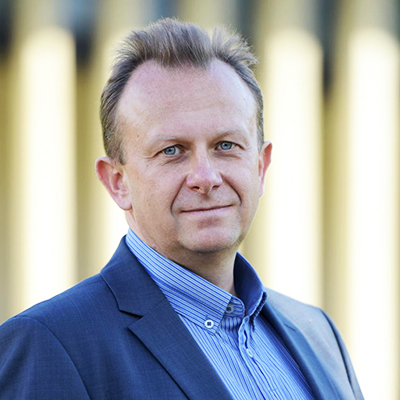
Michal Holčapek
University of Pardubice
Faculty of Chemical Technology, Pardubice
Your Title Goes Here
Your content goes here. Edit or remove this text inline or in the module Content settings. You can also style every aspect of this content in the module Design settings and even apply custom CSS to this text in the module Advanced settings.
Michal Holčapek obtained his Ph.D. in analytical chemistry from the University of Pardubice (1999), where he currently serves as a professor of analytical chemistry. His research focuses on mass spectrometry and its coupling with liquid chromatography or supercritical fluid chromatography, applied mainly to lipidomic analysis and cancer biomarker research. He has received numerous prestigious awards, including the Neuron Award for Connecting Science and Business (2023, Neuron Foundation), the Rudolf Lukeš Prize (2023, Experientia Foundation), the Herbert J. Dutton Award (2022, American Oil Chemists’ Society), and has been repeatedly recognized on The Analytical Scientist’s Power List of the most influential people in analytical science. He is one of the founding members of the Lipidomics Standards Initiative and the International Lipidomics Society.
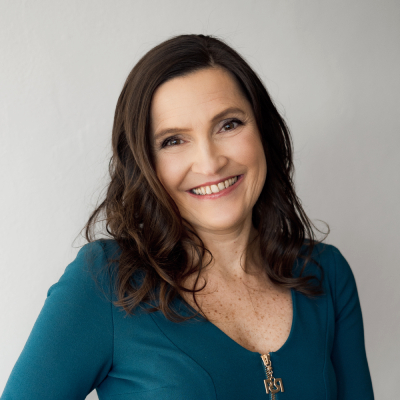
Lucie Nováková
Charles University
Faculty of Pharmacy, Hradec Králové
Your Title Goes Here
Your content goes here. Edit or remove this text inline or in the module Content settings. You can also style every aspect of this content in the module Design settings and even apply custom CSS to this text in the module Advanced settings.
Lucie Nováková is a Full Professor in Analytical Chemistry at the Charles University, Faculty of Pharmacy in Hradec Králové, Czech Republic. Her research is focused on separation techniques, including UHPLC, SFC and their coupling to mass spectrometry. She is involved in a wide scope of research projects in pharmaceutical analysis, doping control, plant analysis, and bioanalytical methods. She authored the book on HPLC theory and practice in Czech and in English (https://czechhplcbook.com) and ten book chapters. She published almost 180 peer-reviewed scientific articles with more than 6600 citations and an h-index of 44. She is also widely involved in teaching and education activities.
MEMBERS
Petr Bednář
Palacký University
Faculty of Science, Olomouc
Your Title Goes Here
Your content goes here. Edit or remove this text inline or in the module Content settings. You can also style every aspect of this content in the module Design settings and even apply custom CSS to this text in the module Advanced settings.
Petr Bednář is a Professor and Head of the Department of Analytical Chemistry at Palacký University Olomouc, Czech Republic. He received his PhD in 2002 and habilitated in 2006. His international research experience includes stays at C.N.R. Rome, Italy, Berkeley University and University of Texas at Arlington, USA. His work focuses on separation methods, mass spectrometry, ion mobility mass spectrometry, ambient and direct MS, chiral separation, analysis of natural products and metabolites and application of analytical techniques in archaeology and cultural heritage protection. He is author of +100 papers (WOS, h-index: 23), several book chapters and a monograph. He has also served as a guest editor for the Journal of Separation Science (2003, 2024). Since 1997, he has been the organizer of the conference series Advances in Chromatography and Electrophoresis & Chiranal, held biennially.
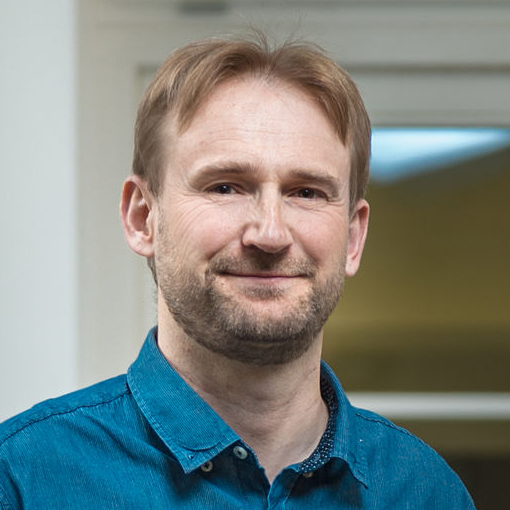
Josef Cvačka
Czech Academy of Sciences
Institute of Organic Chemistry and Biochemistry, Prague
Your Title Goes Here
Your content goes here. Edit or remove this text inline or in the module Content settings. You can also style every aspect of this content in the module Design settings and even apply custom CSS to this text in the module Advanced settings.
Josef Cvačka is head of the Mass Spectrometry Group at the Institute of Organic Chemistry and Biochemistry of the Czech Academy of Sciences and a professor at the Faculty of Science, Charles University in Prague. His research focuses on the structural analysis of bioactive organic compounds using advanced mass-spectrometric techniques. He develops methods for pinpointing double-bond and methyl-branching positions in lipids and aims to discover new lipid classes in biological samples. His laboratory also designs new ion sources for MS and HPLC/MS. He teaches and supervises students at Charles University and founded the Czech Museum of Mass Spectrometry.
Petr Česla
University of Pardubice
Faculty of Chemical Technology, Pardubice
Your Title Goes Here
Your content goes here. Edit or remove this text inline or in the module Content settings. You can also style every aspect of this content in the module Design settings and even apply custom CSS to this text in the module Advanced settings.
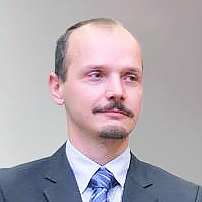
Petr Česla is an Associate Professor and Head of the Department of Analytical Chemistry at the Faculty of Chemical Technology, University of Pardubice, Czech Republic. His research focuses on the development of liquid chromatographic separations, including two-dimensional separations, retention modeling, and optimization procedures. The main application areas of his work include the analysis of naturally occurring plant metabolites, pharmaceuticals, and industrial samples such as surfactants, oligomers and synthetic dyes. He also represents the Czech Republic in the Central European Group of Separation Sciences.
Petr Chocholouš
Charles University
Faculty of Pharmacy, Hradec Králové
Your Title Goes Here
Your content goes here. Edit or remove this text inline or in the module Content settings. You can also style every aspect of this content in the module Design settings and even apply custom CSS to this text in the module Advanced settings.
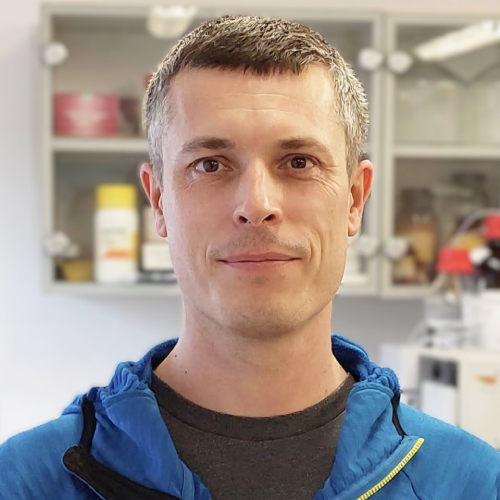
Petr Chocholouš is an Associate Professor at the Faculty of Pharmacy, Charles University. His career started in 2002 with the introduction of Sequential Injection Chromatography, which combines a separation column with Sequential Injection Analysis for multi-component analysis similar to HPLC. Since then, he has developed flow manifolds for both sample treatment and analysis, studied mechanisms of liquid chromatography, characterized new SPE sorbents, automated online SPE, and hyphenated it with HPLC and 2D HPLC. His work typically focuses on pharmaceutical analysis, bioanalysis, and oceanography.
Robert Jirásko
University of Pardubice
Faculty of Chemical Technology, Pardubice
Your Title Goes Here
Your content goes here. Edit or remove this text inline or in the module Content settings. You can also style every aspect of this content in the module Design settings and even apply custom CSS to this text in the module Advanced settings.
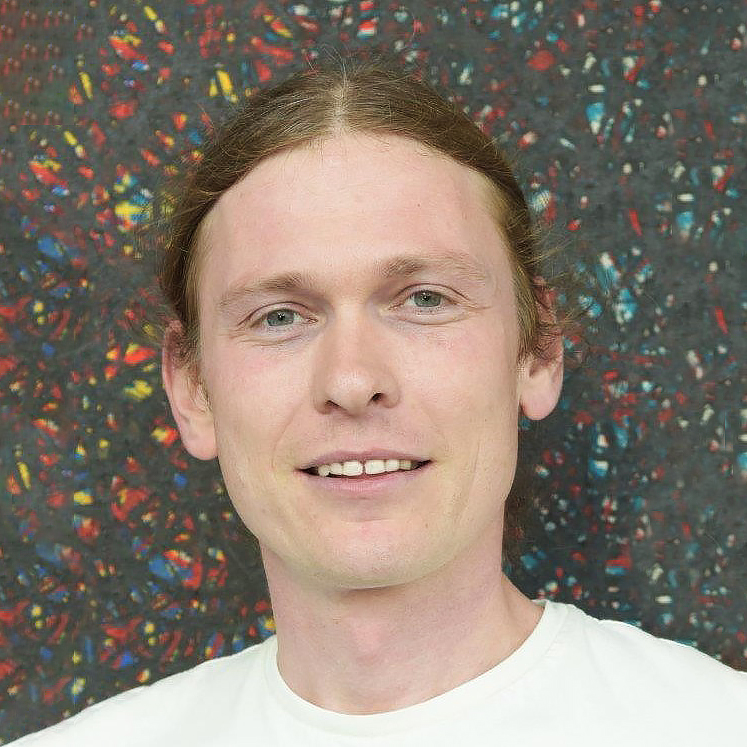
Robert Jirásko obtained his Ph.D. in analytical chemistry from the University of Pardubice, where he currently works as an Assistant Professor. His research focus is on the application of advanced mass spectrometry and separation techniques for the development of analytical methods in lipidomics and metabolomics, with a primary emphasis on cancer-related studies. He has coauthored over 100 articles in peer-reviewed journals with over 2500 citations (h-index of 31). He is also an experienced organizer of scientific events, having served on local organizing committees for several editions of the national conference School of Mass Spectrometry, as well as for the 45th International Symposium on High Performance Liquid Phase Separations (HPLC 2017).
Václav Kašička
Czech Academy of Sciences
Institute of Organic Chemistry and Biochemistry, Prague
Your Title Goes Here
Your content goes here. Edit or remove this text inline or in the module Content settings. You can also style every aspect of this content in the module Design settings and even apply custom CSS to this text in the module Advanced settings.
Václav Kašička is head of Laboratory of Electromigration Methods (www.uochb.cz/kasicka) at the Institute of Organic Chemistry and Biochemistry of the Czech Academy of Sciences since 1995. He is engaged in development of electroseparation methods and their application for analysis and characterization of (bio)molecules. He is (co)author of 200 papers in impacted journals, 20 book chapters, and 160 lectures at international symposia, with 4922 citations, h-index 39. He is associated editor of the Journal of Separation Science, and member of editorial boards of Electrophoresis, J. Chromatogr. A and other journals. He is chair of Chromatography and Electrophoresis Group of the Czech Chemical Society, and member of permanent Scientific Committees of International Symposia ITP YYYY and LACE YYYY.
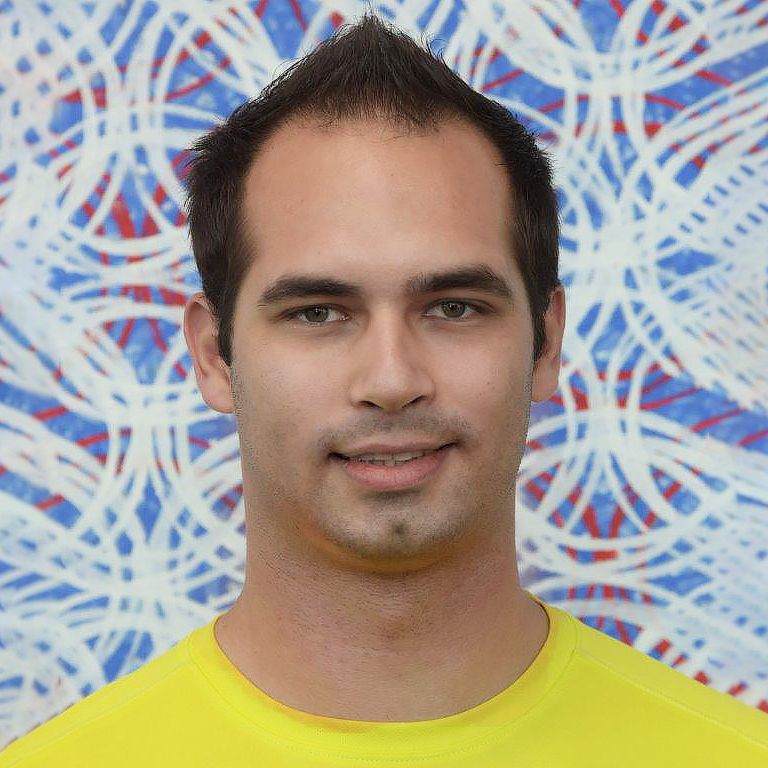
Ondřej Peterka
University of Pardubice
Faculty of Chemical Technology, Pardubice
Your Title Goes Here
Your content goes here. Edit or remove this text inline or in the module Content settings. You can also style every aspect of this content in the module Design settings and even apply custom CSS to this text in the module Advanced settings.
Ondřej Peterka received his Ph.D. in Analytical Chemistry in 2021 from the University of Pardubice. He is a young postdoctoral researcher in the Mass Spectrometry group led by Prof. Michal Holčapek at the University of Pardubice and a senior analyst at Lipidica, a spin-off company of the University of Pardubice aiming to translate the patented methodology for the early detection of pancreatic cancer. His research focuses on lipidomic analyses and cancer biomarker research, employing chromatographic techniques coupled with mass spectrometry, with a particular emphasis on chemical derivatization strategies. He is author of 17 papers in peer-reviewed journals with over 450 citations and he received the Neuron Prize for Connecting Science and Business in 2023.
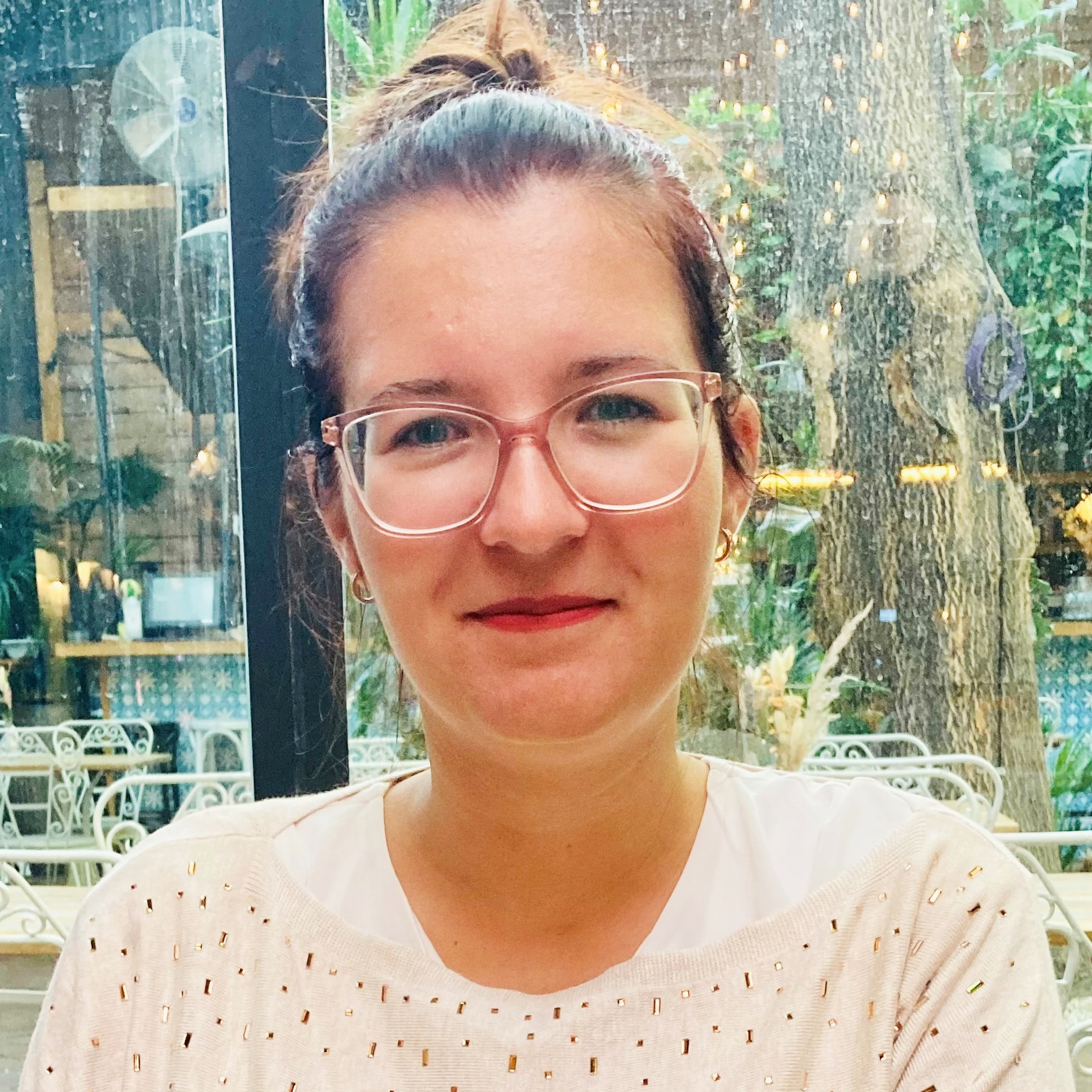
Kateřina Plachká
Charles University
Faculty of Pharmacy, Hradec Králové
Your Title Goes Here
Your content goes here. Edit or remove this text inline or in the module Content settings. You can also style every aspect of this content in the module Design settings and even apply custom CSS to this text in the module Advanced settings.
Kateřina Plachká received her PhD in Analytical Chemistry in 2020 from the Faculty of Pharmacy, Charles University, Czech Republic. She has published over 25 papers focusing especially on supercritical fluid chromatography (SFC) and its fundamental aspects, including retention and SFC-MS hyphenation evaluated with the use of artificial neural networks. She also focuses on application of SFC in pharmaceutical, bioanalytical, and plant analyses. She further specializes in sample preparation techniques for biological and plant matrices. Kateřina has broadened her expertise in sample preparation, ion mobility mass spectrometry, and SFC through research stays at the University of Toulouse III, the University of Geneva, and the Free University of Berlin.
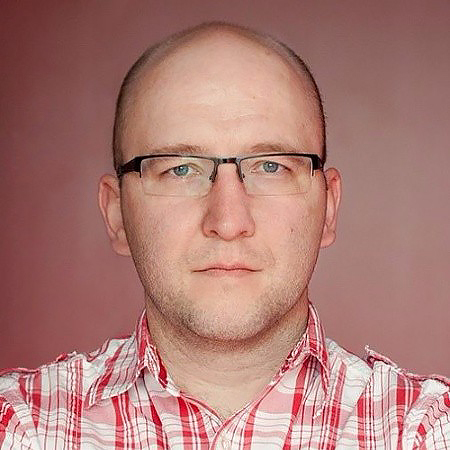
Jiří Urban
Masaryk University
Faculty of Science, Brno
Your Title Goes Here
Your content goes here. Edit or remove this text inline or in the module Content settings. You can also style every aspect of this content in the module Design settings and even apply custom CSS to this text in the module Advanced settings.
Jiri Urban received his Ph.D. in 2007 under the supervision of Pavel Jandera at the University of Pardubice, Czech Republic, where he remained until 2016. From 2009 to 2011, he conducted postdoctoral research at the University of California, Berkeley, USA, in the groups of Frantisek Svec and Jean M. J. Fréchet. In 2017, he joined the Department of Chemistry at Masaryk University in Brno, Czech Republic, where he was appointed Associate Professor in 2018 and subsequently became a Full Professor in 2025. His research focuses on the use of multifunctional polymer monoliths for developing new analytical methods applicable to metabolomics and proteomics. He also investigates retention modeling in chromatographic method development and the design of novel instrumental setups for two-dimensional liquid chromatography.

FOLLOW US ON SOCIAL MEDIA